


The "Bench"; Strategy: How to Scale Your Band Without Losing Quality

You just booked three killer corporate gigs for the same weekend. Great news, right?
Then your drummer texts: "Can't make Saturday. Family thing."
And just like that, you're in full panic mode, scrolling through your contacts at 11 PM, sending desperate "you available?" messages, and praying someone decent is free.
If that scenario sounds painfully familiar, you're not alone. But here's the hard truth: you can't scale a band if you're always one cancellation away from disaster.
The good news? There's a smarter way to run your operation. It's called the "Bench Strategy," and it's how professional entertainment companies book multiple gigs on the same night without losing quality, burning out, or relying on luck.
Let me walk you through it.
The Burnout Trap: Why the "Same 5 People" Model Doesn't Scale
Most bandleaders start the same way. You've got your core crew, maybe 4 or 5 musicians you trust. They know the charts, they show up on time, and the chemistry is solid.
So you do every gig with the same lineup.
It works great... until it doesn't.
Someone gets sick. Someone books a better-paying tour. Someone's kid has a school event. And suddenly you're scrambling to find a replacement 48 hours before a $5,000 corporate gala.
Here's what happens next: You settle for whoever's available. Maybe they're good, maybe they're not. Maybe they know half the setlist. Maybe they show up in jeans when you specifically said "black tie."
And now you're stressed, the client notices the vibe is off, and you're mentally adding "never again" next to that sub's name.
This is the burnout trap. You're trying to do every gig with the same small group, and when life happens (because it always does), you're left with zero options and maximum stress.
You can't grow a business this way. You can only survive it.
The "Core Team + Bench" Concept: How the Pros Do It
Professional entertainment companies don't rely on luck. They don't panic when someone cancels. Why? Because they've built a roster system that separates their musicians into two groups:
The Core Team: These are your regulars. The players who get first priority on gigs. They know your brand, your style, and your expectations inside-out. They're the A-team.
The Bench: This is your pre-vetted pool of elite substitutes. These aren't random musicians you found on Craigslist. They're players you've already worked with, auditioned, or referred by someone you trust. They know your charts, they've rehearsed with you, and they're ready to step in on short notice.
Think of it like a sports team. The starting lineup gets most of the playing time, but when someone needs a break or gets injured, the coach doesn't panic, they've got quality players on the bench ready to go.

The key difference? Your bench isn't made up of "backups" in the negative sense. They're equally talented musicians who just might have different availability or preferences. Some want fewer gigs. Some only want certain types of events. Some are touring musicians who take local gigs when they're home.
But when you need them, they're ready.
This is how you stop relying on desperation texts and start running a professional operation.
Quality Control: Making Sure Your Bench Knows the Vibe
Here's the question I always get: "Okay, but how do I make sure my subs don't mess up the gig?"
Fair concern. The whole point of this strategy is to scale without losing quality. So let's talk quality control.
Step 1: The Audition or Trial Gig
Before anyone gets added to your bench, they need to prove they can hang. This doesn't mean a formal audition (though you can do that). It just means you bring them in for a lower-stakes gig first.
A casual lounge set. A private party. Something where you can see how they handle the music, the vibe, and the professionalism without risking your reputation at a corporate gala.
If they nail it, they're on the roster. If they don't, you politely move on.
Step 2: The Shared Chart Library
Every musician on your bench should have access to your setlist and charts. This isn't optional.
Whether it's a shared Google Drive, Dropbox folder, or a resource section in your band management app, your subs need to be able to prep before the gig. No showing up cold. No "I'll figure it out on the fly."
If they can't commit to learning the material, they don't belong on your bench.
Step 3: The Pre-Gig Brief
Even your best subs need context. Send a quick message (or use an automated tool, more on that in a second) that covers:
- Dress code
- Load-in time
- Setlist for that specific event
- Any client quirks or special requests
This takes 2 minutes and prevents 90% of the "oops, I didn't know" situations.
When your bench musicians show up prepared, informed, and on-brand, the client never knows they're not your regulars. That's the goal.
Automation is the Secret Sauce: Auto-Book Fills the Slots in Seconds
Let's be honest, manually managing a bench sounds exhausting, right?
You've got 15 musicians in your roster. You need to fill a Saturday night gig. So you start texting:
"Hey, you free Saturday?"
"Nope, booked."
"Cool, how about you?"
"Can't, family thing."
"Okay, third option..."
By the time you've filled the lineup, you've sent 20 texts and wasted an hour.
This is where automation changes everything.
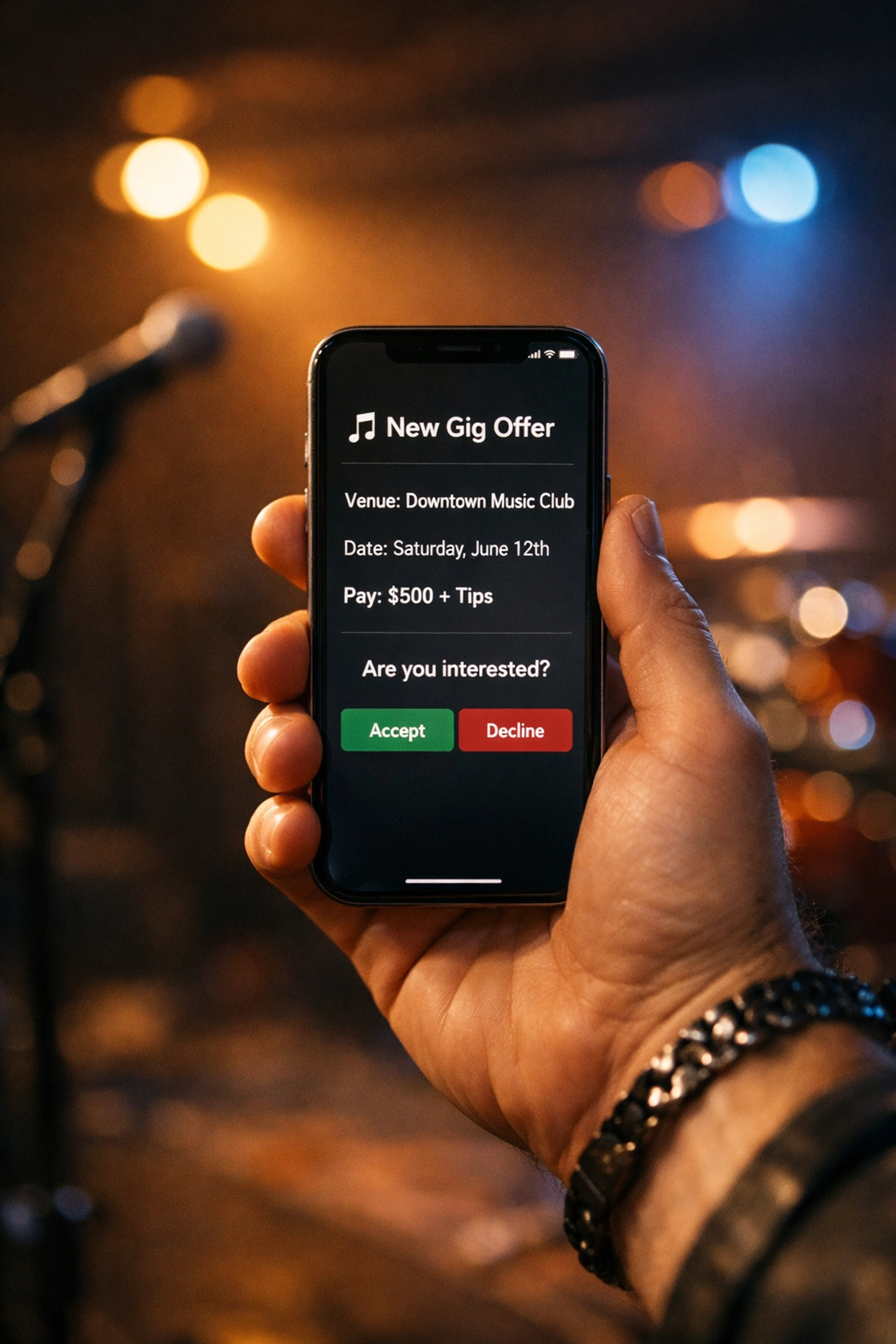
Back On Stage's Auto-Book feature does the heavy lifting for you. Here's how it works:
- You create a gig and mark which positions you need filled (drums, keys, horn section, whatever).
- The system automatically sends offers to your pre-ranked musicians based on who you've prioritized for that gig type.
- Musicians get a notification on their phone. They tap "Accept" or "Decline."
- The first person to accept gets the gig. Everyone else gets notified it's been filled.
- You didn't send a single text.
No more group chats. No more "did you see my message?" follow-ups. No more waiting hours for responses.
The slot gets filled in minutes, not hours. And you didn't lift a finger.
This is how you go from "scrambling to find a drummer" to "my roster is systemized and I'm focusing on landing better gigs."
Scaling Your Business: Booking Multiple Gigs on the Same Night (The Right Way)
Here's where the bench strategy unlocks serious revenue potential.
Once you've got a solid core team and a vetted bench, you're no longer limited to one gig per night. You can book two. Three. Hell, some bandleaders run 5+ configurations on a busy weekend.
But let's be clear: This isn't about double-booking and hoping for the best. It's about intentional scaling with systems in place.
Here's the setup:
- Configuration A: Your flagship 9-piece band plays the high-end wedding.
- Configuration B: Your 5-piece jazz combo plays the corporate cocktail hour across town.
- Configuration C: Your acoustic duo handles the intimate anniversary party.
Each lineup is pre-built in your roster. Each musician knows which config they're part of. And because you've automated the booking process, filling these gigs doesn't require a PhD in logistics.
You're not spreading yourself thin. You're leveraging your roster depth to serve more clients without sacrificing quality.
And the result? You're bringing in 2x or 3x the revenue on a single Saturday night.
That's not hustling harder. That's scaling smarter.
Stop Relying on Luck. Start Building Your Bench.
Look, I get it. The idea of managing a bigger roster can feel overwhelming at first. You might be thinking, "I can barely keep track of my core 5 musicians. Now you want me to manage 15?"
But here's the thing: You're already doing the hard part. You're already panicking when someone cancels. You're already sending desperate texts at midnight. You're already turning down gigs because you don't have enough players.
The bench strategy doesn't create more work: it eliminates the chaos.
It turns your band from a scrappy hustle into a professional operation that clients trust, musicians want to be part of, and you can actually scale without burning out.
And when you combine that strategy with the right tools (like Auto-Book), you're not just managing a roster: you're running a real business.
So here's my challenge: Start building your bench this week. Reach out to 3 musicians you've worked with before and add them to your roster. Set up a shared chart library. Get your system in place.
Because the next time your drummer cancels 48 hours before a gig, you're not going to panic.
You're going to open your app, hit "Auto-Book," and watch the slot get filled in 5 minutes.
That's the difference between surviving and scaling.