

Stop Trying to Be Taylor Swift: Why Your Band is a Service, Not a Product
I remember the exact moment my perspective on the music industry shattered.
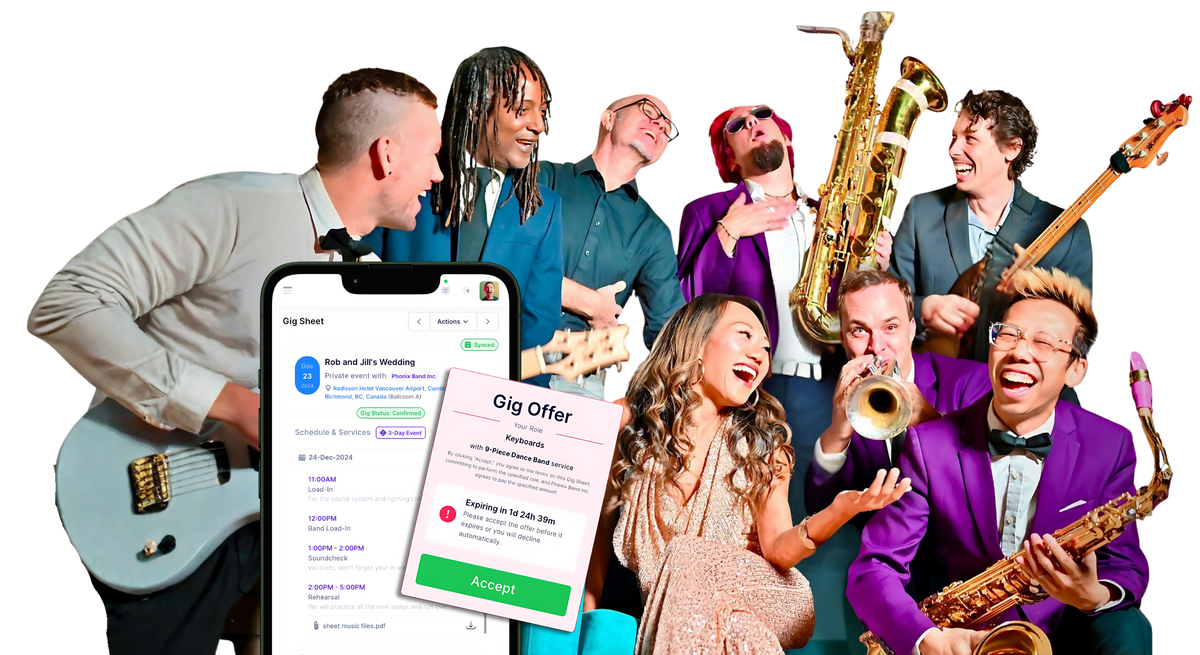
It was about 15 years ago. My band, The Phonix, had just finished a set. We were tight, we were energetic, and we were sweating through our suits. In my head, I was a rockstar. I was thinking about our original songs, our "artistic integrity," and how we were going to get famous.
Then, the father of the bride walked up to me, handed me a check, and said, "Thanks for keeping the dance floor full. You guys were a great service."
Service.
That word stuck in my throat. I didn't want to be a "service provider", that sounded like a plumber or an accountant. I wanted to be an artist.
But here's the brutal truth that took me years to accept: In the private events industry, you are not Taylor Swift. You are a service provider. And the moment I accepted that, my income tripled.
If you're struggling to make a living in music, it's likely because you're operating with a "Music as a Product" (MaaP) mindset in a "Music as a Service" (MaaS) economy. Let's fix that today.

The Two Music Economies
To succeed, you have to know which game you're playing.
1. Music as a Product (MaaP):
This is the "Rockstar" dream. Your music is the product. You sell CDs, streams, and concert tickets.
- The Customer: The Fan.
- The Goal: Fame, virality, artistic expression.
- The Reality: High risk, low probability of success. For every Taylor Swift, there are a million starving artists.
2. Music as a Service (MaaS):
This is the "Working Musician" reality. Your performance is a service you sell to enhance an event.
- The Customer: The Client (Bride, Corporate Planner, Event Manager).
- The Goal: Reliability, client satisfaction, high fees.
- The Reality: Lower risk, high probability of success, immediate cash flow.
Most bandleaders try to run a MaaS business (weddings/corporate) with a MaaP mindset. They focus on how cool their solos are, rather than whether they replied to the client's email on time.
That disconnect costs you gigs.
Why "Good Music" Isn't Enough
In the MaaS world, talent is just the entry fee. Being a great musician gets you to the starting line, but it doesn't win the race.
When a corporate planner hires a band for a gala, they aren't looking for the most artistic interpretation of a jazz standard. They're looking for risk mitigation. They're asking:
- "Will this band show up on time?"
- "Will they dress appropriately?"
- "Will they be easy to work with, or will they be divas?"
- "Will they make me look good to my boss?"
If you treat your band like an art project, you are a risk. If you treat it like a business, with contracts, prompt communication, and professional systems, you are an asset.
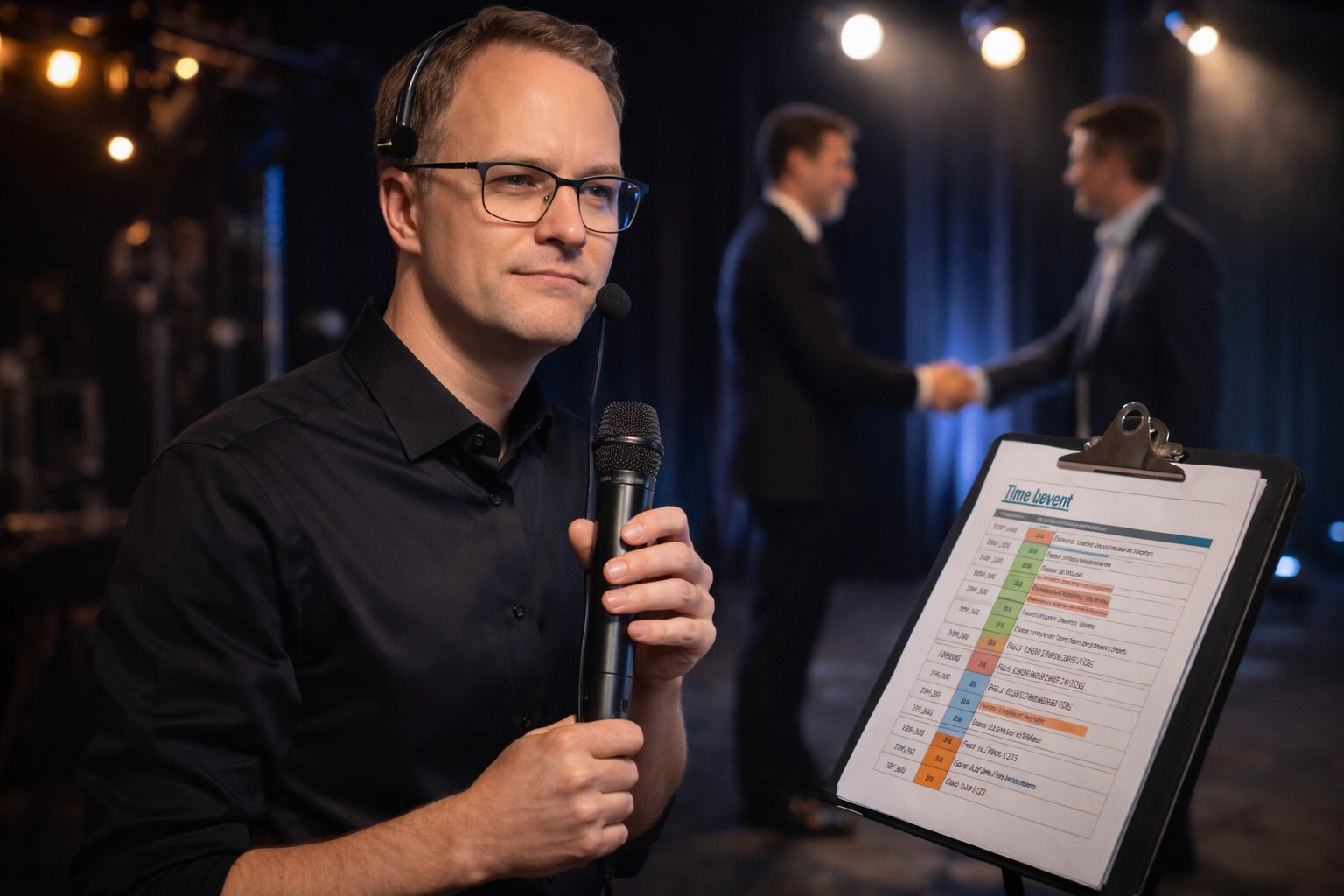
Here's what changed everything for me: I stopped competing on talent alone and started competing on reliability and professionalism. Once I did that, referrals exploded.
The Mental Switch: From Artist to CEO
When I stopped seeing myself just as a trumpet player and started seeing myself as the CEO of a logistics company that happens to sell music, everything changed.
We started using contracts for everything. We standardized our attire. We built systems for payroll. We responded to inquiries within an hour instead of "when I felt like it."
Suddenly, high-end planners started recommending us. Not because we got better at our instruments (though we did), but because we were the "easy button" for their events.
This realization is what led me to build Back On Stage. I needed band management software that treated my operation like a real business, not just a hobby with a tip jar. I didn't need a fan club manager; I needed a CRM, a contract generator, and a payroll system that worked without me lifting a finger.
The tools you use should reflect the business model you're in. If you're still managing a service business with a product mindset (or worse, with sticky notes and spreadsheets), you're fighting with one hand tied behind your back.
Tactical Action Items: Your "Service" Audit
Ready to make the shift? Here are three things you can do this week to professionalize your mindset:
1. The "Client Avatar" Definition
Stop trying to appeal to everyone. Who actually pays you?
Action: Write down a profile of your ideal client. Is it a 30-something bride with a $50k budget? Is it a Destination Management Company (DMC)? Tailor your language to them, not to other musicians.
Once you know who you're serving, your marketing gets 10x clearer.
2. The 24-Hour Rule
In the service industry, speed is currency.
Action: Commit to responding to every inquiry within 24 hours (ideally 1 hour). If you can't, set up an auto-responder that manages expectations.
(By the way, Back On Stage handles this systematically with our Lead Form integration, every inquiry gets captured and responded to without you having to remember.)
3. The "Product" Cleanse
Look at your website. Does it talk about your "artistic journey" and your "influences"?
Action: Rewrite your bio. Focus on what you do for the client.
Instead of: "We play jazz fusion inspired by Miles Davis"
Try: "We create sophisticated atmospheres for high-end cocktail hours that allow your guests to network without shouting."
See the difference? One is about you. One is about them.
The Bottom Line
You can still be an artist on stage. Pour your soul into the music.
But off stage, you must be a CEO. Embrace the "Service" mindset, and watch your calendar fill up.
The bands that thrive in the private events world aren't always the most talented. They're the most reliable, professional, and easy to work with. They treat their operation like a business, not a garage band that got lucky.
If you want to scale past the "hustling for every gig" phase and into the "planners call me first" phase, you need to think like a service provider. That means systems, processes, and tools built for artist management, not just raw talent.
Want to see how the pros systemize their band management? Check out how Back On Stage helps bandleaders run their operations like real businesses.
Ready to Run Your Band Like a Business?
If you're tired of the "part-time musician, full-time administrator" grind, Back On Stage is built for you.
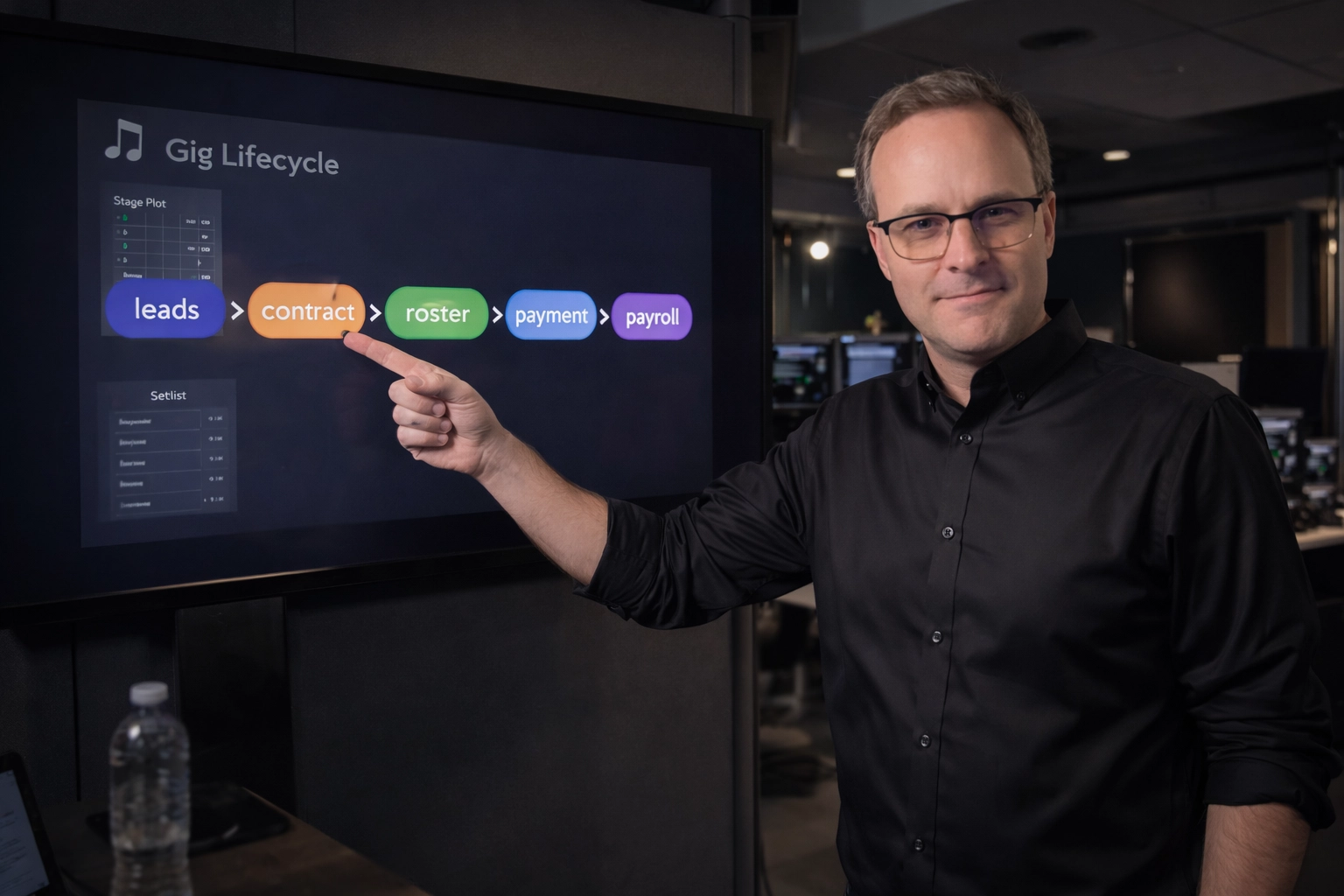
We help you manage leads, contracts, rosters, invoices, and payroll in one place, so you can focus on the music and let the system handle the admin.
Start your 30-day free trial here: https://backonstageapp.com
And yes, there's a 90-day money-back guarantee: because we're confident you'll never want to go back to spreadsheets.
P.S. Every account includes complimentary white-glove onboarding (a $99 value). We'll help you get your workflow, client flow, and band management systems set up so you can start running like a CEO from day one.