

The All-In-One Advantage: Slashing Subscription Costs & Complexity for Your Band
How many software subscriptions are you paying for right now to run your band?
Go ahead. Count them. I'll wait.
If you're like most bandleaders I talk to, the answer is somewhere between "too many" and "honestly, I've lost track." You've got one tool for scheduling, another for invoicing, something else for contracts, a separate CRM for leads, and maybe a project management app you signed up for during a 3 AM panic attack after dropping the ball on a booking.
Here's the hard truth: that patchwork of tools is costing you way more than you realize: in dollars, in hours, and in sanity. Let's talk about why all-in-one band management is the smarter play, and how consolidating your tech stack can give you back 5+ hours a week and hundreds of dollars a month.
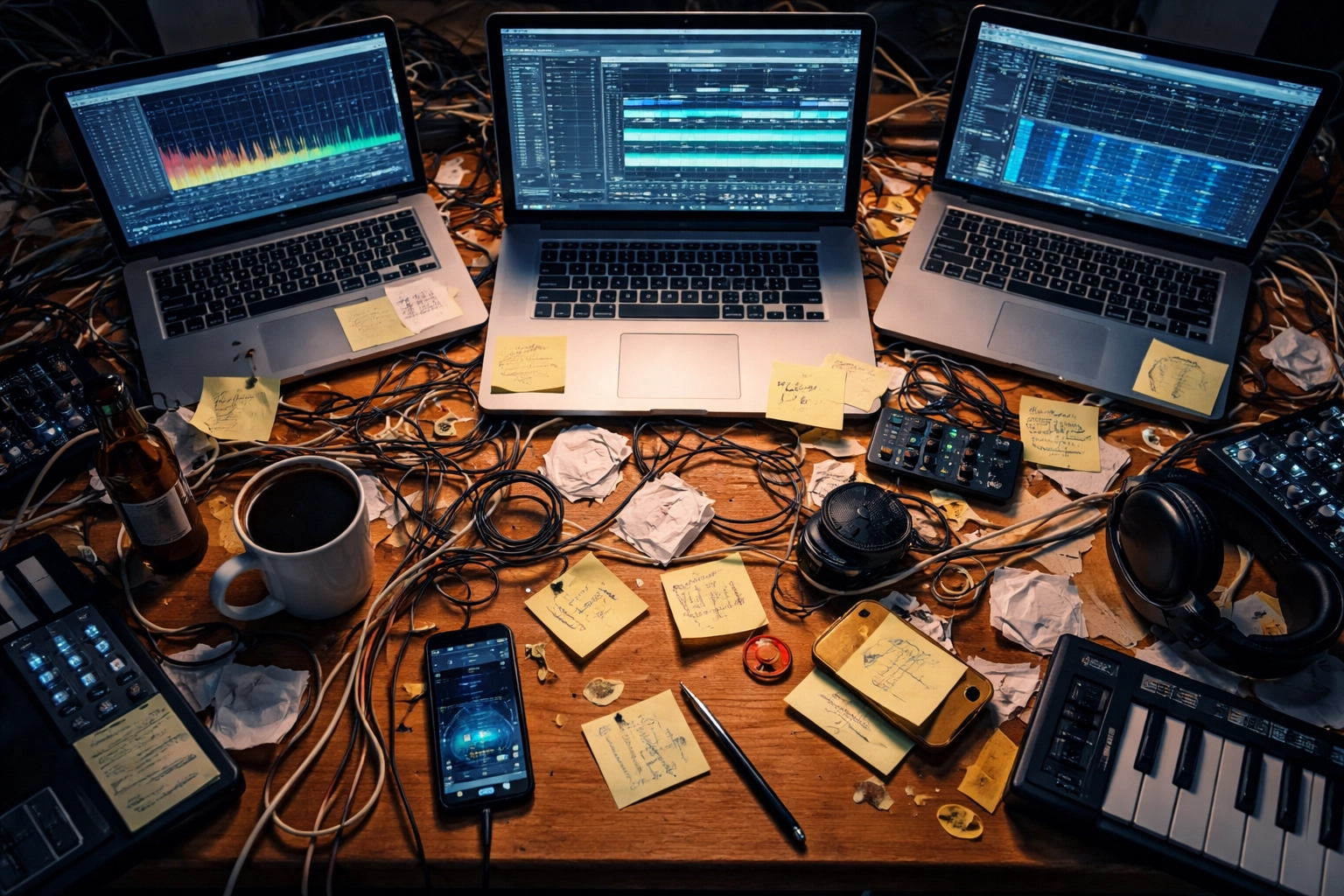
The "Frankenstein Stack" Problem
I get it. When you started your band, you weren't thinking about software architecture. You needed to send an invoice, so you grabbed QuickBooks. You needed to manage your calendar, so you tried Google Calendar. Then a booking came in and you needed contracts, so you signed up for Dubsado. Before you knew it, you had a Frankenstein monster of apps stitched together with duct tape and good intentions.
The problem? None of these tools talk to each other.
So now you're manually copying client info from your email into your CRM. Then copying it again into your invoicing software. Then again into your calendar. And every time you do that, you're:
- Wasting time on repetitive data entry
- Risking errors that make you look unprofessional
- Paying for 5 different subscriptions that each do one thing
This is what I call the "admin tax": the invisible hours you lose every week just keeping your digital house in order.
Let's Talk About the Real Cost
Most bandleaders I work with are shocked when they actually add up what they're spending on software. Let me break down a typical "patchwork" stack:
- Project management (Monday.com, Asana): $10–$25/month
- Email marketing/CRM (Active Campaign, Mailchimp): $15–$50/month
- Contracts and proposals (Dubsado, HoneyBook): $20–$40/month
- Invoicing (QuickBooks, FreshBooks): $15–$30/month
- Scheduling (Calendly, Doodle): $10–$15/month
- File storage (Dropbox, Google Drive): $10–$20/month
Add it up and you're looking at $80 to $180 per month: potentially over $2,000 a year: just to run the business side of your band. And that's before we even count the time you spend switching between tabs, re-entering data, and troubleshooting why your Zapier integration broke again.
Here's the kicker: you became a musician to play music, not to become an IT department.
The All-In-One Advantage
What if you could replace that entire patchwork with a single platform built specifically for bandleaders?
That's exactly why we built Back On Stage. It's not a generic business tool that you have to bend and twist to fit your workflow. It's designed from the ground up for the way bands actually operate.
Instead of juggling six different logins, you get:
- Scheduling and availability tracking for your entire roster
- Lead capture and CRM to manage inquiries and follow-ups
- Contracts and e-signatures that clients can sign in seconds
- Invoicing and payment processing built right in
- Automated workflows that handle the repetitive stuff for you
- Centralized communication so nothing falls through the cracks
One platform. One login. One monthly cost.

What Back On Stage Actually Replaces
Let me get specific here, because I know you're wondering if this can actually replace the tools you're already using.
Instead of Monday.com or Asana for project management, Back On Stage gives you a visual calendar and task system designed for gig logistics: not generic "projects."
Instead of Active Campaign or Mailchimp for lead nurturing, you get a built-in CRM that tracks every inquiry from first contact to signed contract. You can automate your band bookings with lead forms so leads flow directly into your pipeline without manual entry.
Instead of Dubsado or HoneyBook for contracts and invoicing, Back On Stage handles proposals, contracts, e-signatures, invoices, and payments all in one place. No more copying client details between systems.
Instead of spreadsheets (you know who you are), you get a real database that tracks gigs, contacts, payments, and musician availability without the risk of accidentally deleting a critical formula. If you're still on the fence about ditching Excel, check out why modern bands are switching to management apps.
The result? You reduce software costs by 50% or more, and you eliminate the "integration headaches" that come with stitching together tools that were never meant to work together.
The Hidden Benefit: Reducing Complexity
Here's something that doesn't show up on a spreadsheet: cognitive load.
Every time you switch between apps, your brain has to context-switch. Studies show it takes an average of 23 minutes to fully refocus after switching tasks. If you're bouncing between your CRM, your calendar, your invoicing app, and your email 10 times a day, you're losing hours to mental friction alone.
When everything lives in one place, you stop wasting brainpower on "where did I put that?" and start spending it on the stuff that actually grows your business: like booking better gigs, building client relationships, and oh yeah, playing music.

Real Talk: 5+ Hours Saved Every Week
I'm not making this number up. When we surveyed Back On Stage users, the average bandleader reported saving 5 to 7 hours per week on admin tasks after switching to an all-in-one system.
That's an extra half-day every week. What would you do with an extra half-day?
- Book more gigs
- Spend time with your family
- Actually practice your instrument (remember that?)
- Build relationships with venues and planners
- Take a nap (no judgment)
The point is: time is the one resource you can't buy more of. Every hour you claw back from admin work is an hour you can invest in the things that matter.
If you want to see how this works in practice, we broke down the step-by-step process in our guide to automating your band schedule and payroll.
Is All-In-One Right for You?
Look, I'm not going to pretend that switching platforms is painless. There's always a learning curve, and you'll need to migrate your existing data. But here's the question I'd ask yourself:
Is the pain of switching once greater than the pain of managing a patchwork system forever?
If you're a solo artist just starting out with 5 gigs a year, maybe a spreadsheet and a free invoicing tool is fine. But if you're running a serious operation: multiple band members, dozens of gigs a year, leads coming in regularly: the patchwork approach is actively holding you back.
The most successful bandleaders I know treat their band like a business. And smart businesses don't run on duct tape and good intentions. They run on systems.

Making the Switch
If you're ready to ditch the Frankenstein stack and consolidate into a single platform, here's what I'd recommend:
-
Audit your current tools. List every subscription you're paying for and what it does. Be honest about which ones you actually use.
-
Calculate your true cost. Add up the monthly fees, plus estimate how many hours you spend on manual data entry and switching between apps.
-
Try Back On Stage. Seriously. Check out the platform and see if it covers everything on your list.
-
Migrate gradually. You don't have to cancel everything on day one. Start by moving your leads and calendar, then add contracts and invoicing once you're comfortable.
-
Enjoy your newfound freedom. Use those 5+ hours a week to do literally anything other than admin.
The Bottom Line
Running a band in 2026 means running a business. But it doesn't have to mean running a tech company.
All-in-one band management isn't just about reducing software costs (though saving $1,000+ a year is nice). It's about reducing the mental overhead that comes with juggling a dozen different tools. It's about building a system that works for you instead of creating more work.
You got into music to make music. Let's keep it that way.
Ready to simplify? Back On Stage was built by bandleaders, for bandleaders. One platform. One price. Zero headaches.