
![[HERO] Back On Stage vs. Generic CRMs: Why Your Band Needs a Specialist Tool](http://backonstageapp.com/cdn/shop/articles/Back_On_Stage_vs._Generic_CRMs-_Why_Your_Band_Needs_a_Specialist_Tool_1536x1024.webp?v=1769449780)
Back On Stage vs. Generic CRMs: Why Your Band Needs a Specialist Tool
![[HERO] Back On Stage vs. Generic CRMs: Why Your Band Needs a Specialist Tool](https://cdn.shopify.com/s/files/1/0323/1121/4215/files/Back_On_Stage_vs._Generic_CRMs-_Why_Your_Band_Needs_a_Specialist_Tool.webp?v=1769449586)
So you've finally decided to ditch the spreadsheets. Good call.
You've probably heard of Honeybook, Dubsado, or Monday.com. Maybe you've even tried one. They're solid tools, for photographers, wedding planners, and marketing agencies. But here's the thing: they weren't built for you.
Running a band isn't like running a typical service business. You're juggling musicians, setlists, last-minute subs, client requests, and payroll that changes every single gig. Generic CRMs just don't get it.
Let's break down why specialist tools like Back On Stage leave generic platforms in the dust, and why making the switch might be the best business decision you make this year.
The Problem with "One Size Fits All" CRMs
Generic CRMs were designed for traditional sales teams. Think: lead comes in, you nurture them through a pipeline, close the deal, hand off to fulfillment. Done.
But live music booking? It's chaos. Beautiful, wonderful chaos.
A single gig might have competing holds at multiple venues, deals that shift between flat fees and percentage splits, and settlements that require calculations no standard CRM can handle. Generic platforms track opportunities as binary, open or closed. But your gigs exist in complex intermediate stages that these tools simply can't accommodate.

Here's what you won't find in Honeybook or Monday.com:
- Setlist management (Where do you store keys, tempos, and MP3s? A Google Drive folder you'll forget about?)
- Musician roster automation (Good luck manually texting 15 subs every time your drummer bails)
- Gig-specific payroll (Calculating different rates for different musicians on different gigs? Enjoy your Sunday afternoon in Excel)
- Co-promotion calculations and percentage splits (Yeah, good luck building that in Dubsado)
These aren't edge cases. This is your actual workflow, every single week.
The "Swiss Army Knife" Problem
Here's what usually happens when a bandleader tries to use a generic CRM:
You sign up for Monday.com because a business podcast told you it's great. You spend the first weekend building custom boards, automations, and integrations. You feel productive. You feel like a CEO.
Then reality hits.
You realize you need a separate app for contracts. Another for invoices. A third for file sharing. A fourth for team communication. And you're still texting your musicians individually because nothing actually talks to each other.
This is what I call the "Swiss Army Knife" problem. Sure, that little knife technically has a screwdriver, scissors, and a toothpick. But would you actually build a house with it?
Generic tools require endless setup, custom hacking, and Zapier wizardry just to approximate what a specialist tool does out of the box. And even then, you're duct-taping together a system that'll fall apart the moment something changes.

The time you spend "customizing" your workflow is time you're not spending on bookings, rehearsals, or, heaven forbid, actually playing music.
What Back On Stage Does Differently
Back On Stage was built by Reuben Avery, a bandleader who got tired of cobbling together five different apps just to run his business. He didn't build a generic tool and hope musicians would figure it out. He built exactly what he needed, and what 5,000+ bands and musicians globally now rely on.
Here's what that looks like in practice:
Auto-Book: Stop Chasing Musicians
You know the drill. Gig comes in, you start texting your A-list players. No response. You wait. You follow up. Still nothing. Now you're scrambling through your B-list at 11 PM the night before.
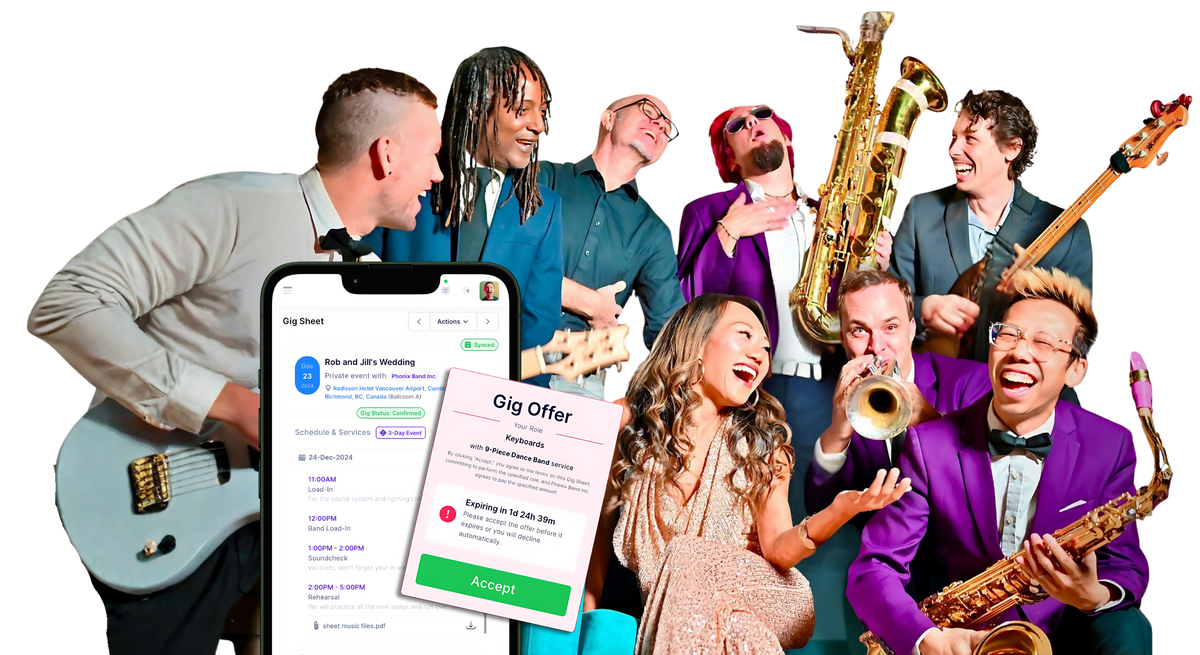
Back On Stage's Auto-Book feature changes everything. It automatically sends gig offers to your preferred call list, handles reminders, and moves down the roster if someone declines. Your team gets booked while you sleep.
No more awkward "hey, you available?" texts. No more lost gigs because you forgot to follow up.
One-Click Payroll: Pay Your Team Without the Headache
Payroll is a pain in the rear. Different musicians, different rates, different gigs, it's a spreadsheet nightmare.
With Back On Stage's payroll feature, you calculate and send payments with a single click. The system tracks who's been paid and who hasn't, so you're never second-guessing yourself at tax time.
On-time payments build trust. And trust keeps your best musicians coming back.

Integrated Setlists: Everything in One Place
Ever shown up to a gig and realized the setlist folder is sitting on your desk at home? Yeah, we've all been there.
Back On Stage's setlist management stores PDFs, MP3s, keys, tempos, videos, and notes in one central location. Your whole band can access everything from their phones. No more frantic group texts asking "what key is the second song again?"
A Client Portal That Actually Makes Sense
Generic CRMs have client portals, sure. But they're designed for... generic clients.
Back On Stage's client portal is built specifically for event music. Invoices, contracts, and communications live in one secure space where clients can review documents, sign electronically, and pay: without you sending seventeen reminder emails.
One booking manager said it best: clients became "impressed with the band's professionalism" just because of how smooth the communication was. That's not fluff: that's repeat business.
Lead Automation That Converts
Leads slip through the cracks. It happens. You're busy playing gigs, not babysitting your inbox.
Back On Stage's customizable inquiry forms and automated follow-up emails make sure no lead gets forgotten. The system nurtures prospects while you focus on what matters.
Built By a Bandleader, For Bandleaders
This isn't a tech company that decided to "pivot into the music vertical." Back On Stage was created by someone who's lived this life: the late-night gig offers, the no-show drummers, the clients who want to change the setlist three hours before showtime.
That matters.
When you use a tool built by someone who understands your workflow, you're not fighting against the software. You're working with it.
Generic CRMs will always feel like you're forcing a square peg into a round hole. Specialist tools like Back On Stage feel like they were designed around your actual day-to-day reality. Because they were.

The Real Cost of Generic Tools
Let's be honest: the "free" tier of Monday.com or the affordable plan on Dubsado seems tempting. But what's it actually costing you?
- Lost gigs because you forgot to follow up
- Lost musicians because payroll was late (again)
- Lost credibility because your client communication looks disorganized
- Lost weekends because you're manually managing what should be automated
Using integrated, music-focused software saves time, reduces costs, and increases revenue. The bands using Back On Stage aren't just more organized: they're booking more gigs and keeping better players.
Ready to Make the Switch?
If you're still duct-taping together Honeybook, Google Sheets, Venmo, and a prayer, it might be time to try something built for the way you actually work.
Back On Stage isn't just another CRM with a music skin slapped on top. It's the tool you'd build yourself if you had the time and the coding skills.
Check out the full feature list and see why thousands of bandleaders have already made the switch. Your future self: and your musicians: will thank you.