


What to Put in a Wedding Band Contract (So a Deposit Actually Locks the Date)
A client sends the deposit. You mark the date in your calendar. Everybody moves on.
Then six weeks later you go to nail down load-in times and realize nobody ever signed anything. You have their money. You do not have their commitment, and you definitely do not have anything you could point to if the venue changes the schedule or the guest count doubles.
This is one of the most common gaps I see in working bands, and it is not a discipline problem. Most of us started out taking gigs on a handshake because that is how the first hundred bookings worked. The contract only becomes urgent the first time something goes sideways.
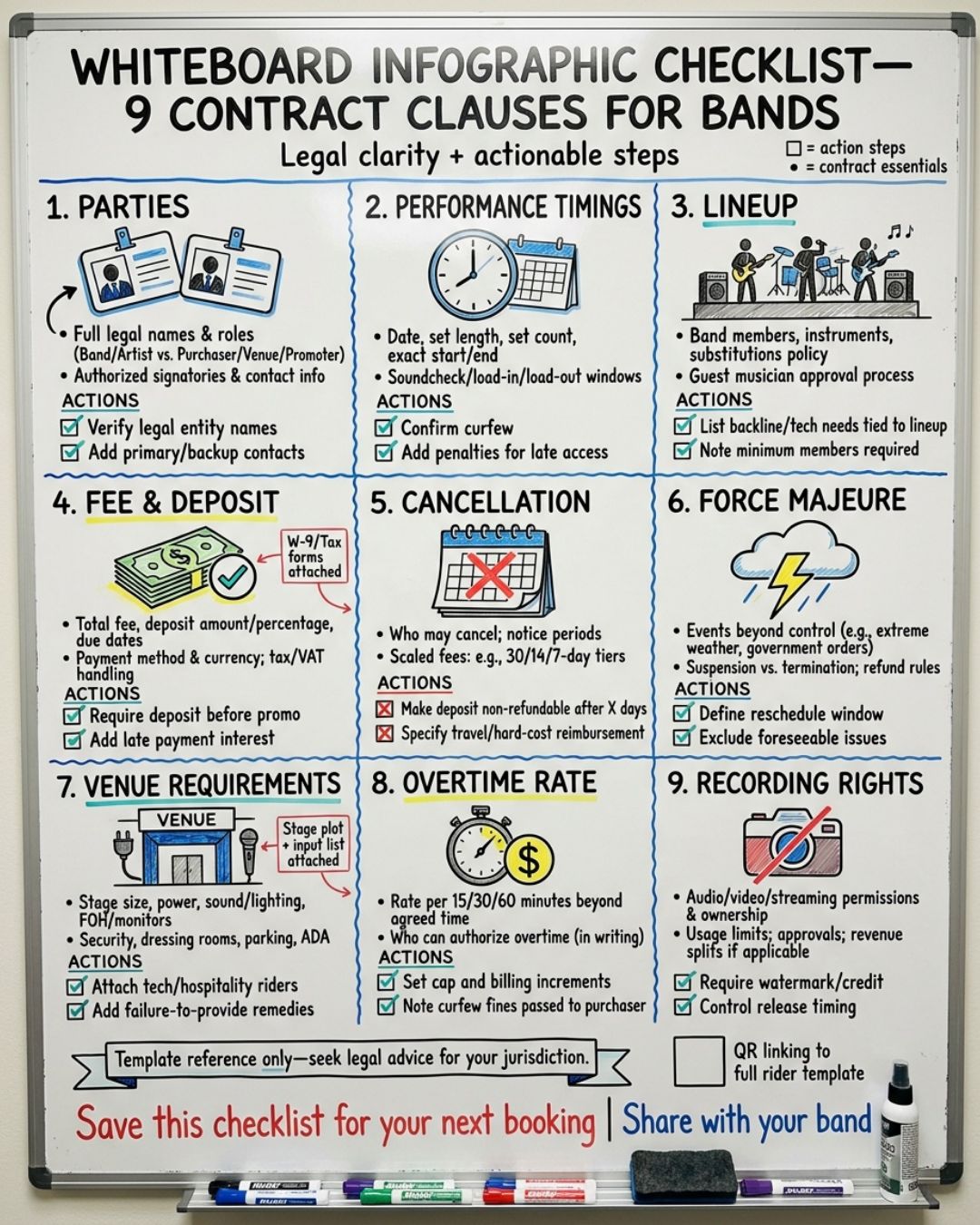
Here is the checklist I use, and what each clause is actually protecting you from.
1. The parties, spelled out properly
Full legal name of your business entity, not just the band name. Full legal name of the client, not just "Sarah and Mike." If a planner is booking on behalf of a couple, name both and state who is responsible for payment. That last part matters more than people expect.
2. Date, times, and what "performance time" means
Event date, load-in time, sound check window, downbeat, set lengths, break lengths, and hard end time. Be specific about the difference between hours on site and hours performing. A five-hour call with three hours of music is a completely different job from five hours of music, and the client will not make that distinction unless you do.
3. Exact lineup and configuration
If you sell a flexible lineup, this clause does a lot of work. Write down the specific configuration sold: a five-piece with two horns, a trio for cocktail hour then the full nine-piece for the reception, whatever it is. Add a substitution clause stating you may replace a musician with one of equal calibre. Every professional band needs that clause, and every reasonable client accepts it.
4. Total fee, deposit, and the payment schedule
Total price, deposit amount, when the deposit is due, when the balance is due, and accepted payment methods. State plainly whether the deposit is non-refundable. If you accept credit cards and pass on the processing fee, say so here, in writing, not in a phone call three weeks later.
5. Cancellation, by them and by you
What happens if the client cancels at 90 days out, at 30 days, at 7 days. Most bands use a sliding scale. Also cover your own side: if you have to cancel for a genuine emergency, what is your obligation? Naming a reasonable standard here, usually finding a replacement act of similar quality or refunding in full, makes the whole document read as fair rather than one-sided.
6. Force majeure, written for the real world
Weather, venue closure, illness, travel disruption. Post-2020 nobody blinks at this clause anymore. Define what happens: postponement to a mutually agreed date, credit toward a future booking, or refund of some portion. Vague force majeure language is almost worse than none, because both sides read it the way that suits them.
7. What the venue and client must provide
Power requirements and how many circuits. Stage or performance area dimensions. Covered space for outdoor events. Parking and load-in access. Meals and non-alcoholic drinks for the band. A secure space for cases and personal items. This clause has saved me more grief than any other, because it turns "we assumed you'd figure it out" into a specific, agreed obligation.
8. Overtime rate
State a per-half-hour or per-hour overtime rate and who has authority to approve it on the night. Weddings run long. Without this clause you either play for free or have an awkward conversation with a father of the bride at 11:45pm.
9. Recording, photography, and promotional use
Whether the client may record the performance, and whether you may use photos and video from the event in your own marketing. Both directions are worth stating. A short, mutual clause here avoids a much longer conversation later.
The part most bands get wrong: sequence
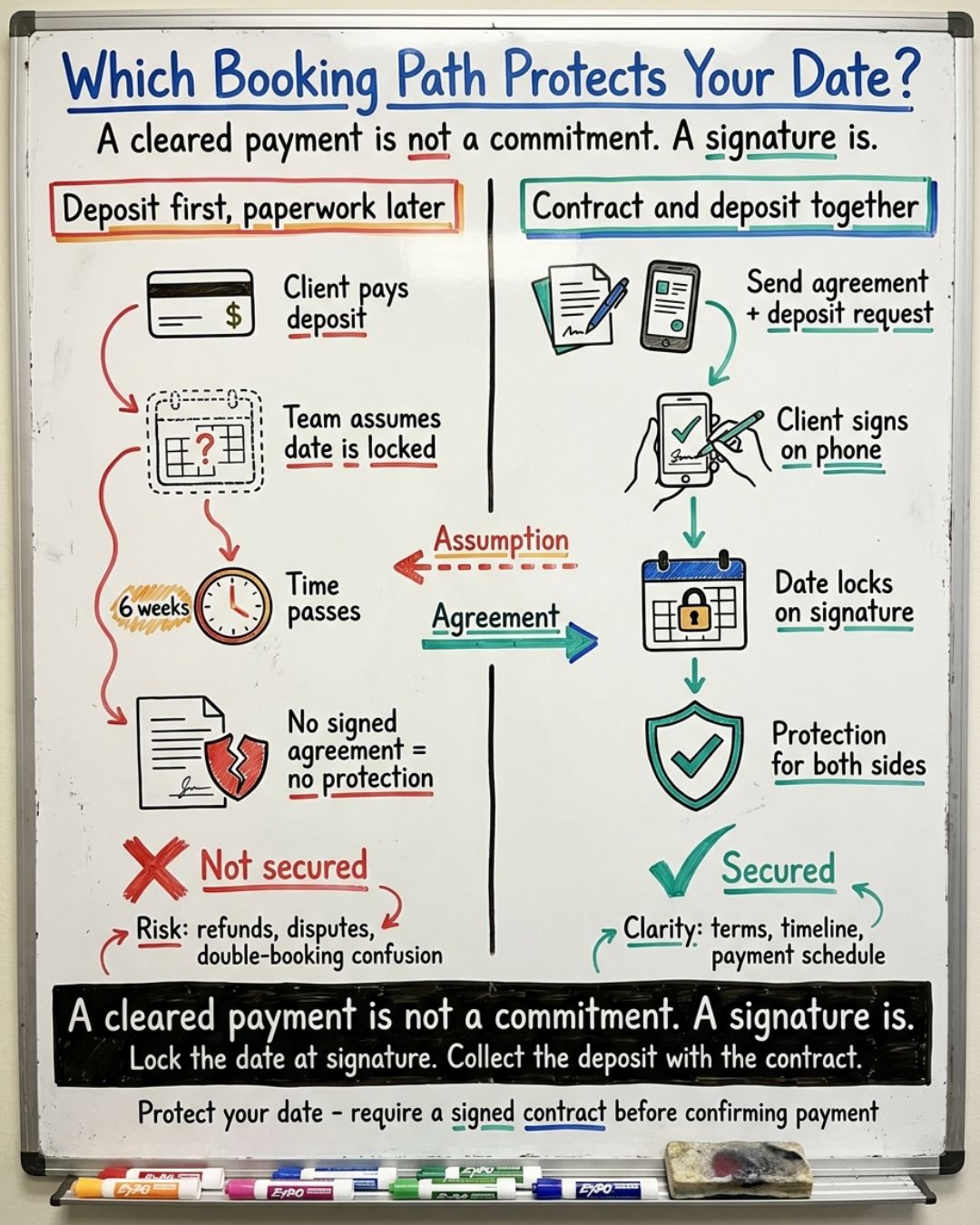
The contract has to come before the deposit, or at minimum alongside it. If you send an invoice first and promise the paperwork later, the paperwork will be the thing that slips, because the client already feels booked and you already have money in the account. Nobody is chasing a signature they think they no longer need.
Send the agreement and the deposit request together. The date is not held until both come back.
How we handle this at Back On Stage
The reason this gap exists for most bands is friction. Building a contract in a word processor, exporting a PDF, emailing it, waiting, and then re-keying the same date and price into an invoice is enough work that it gets postponed.
In Back On Stage, the contract is generated from the booking details already in the system, so the date, lineup, fee, and deposit are pulled straight from what you already entered. The client signs on their phone. The invoice and deposit request go with it. The date locks when the signature comes back, not when someone assumes it has.
None of this replaces a lawyer reviewing your template, and it should not. What it replaces is the version of this job where the contract is a separate chore you keep meaning to get to.
Related reading
- How to Reply to Wedding Band Inquiries in Under 5 Minutes, for the step that happens before the contract.
- How Much Should Your Band Charge?, for setting the number that goes in clause 4.
- Band Payroll 101, for what happens after the gig.
Start with your own template
Take the nine clauses above, have someone qualified in your jurisdiction look them over once, and then stop rewriting the document for every gig. A good band contract is boring and reusable. That is the entire point.
Start your 30-day free trial of Back On Stage and get your contracts, invoices, and deposits moving in the same step.